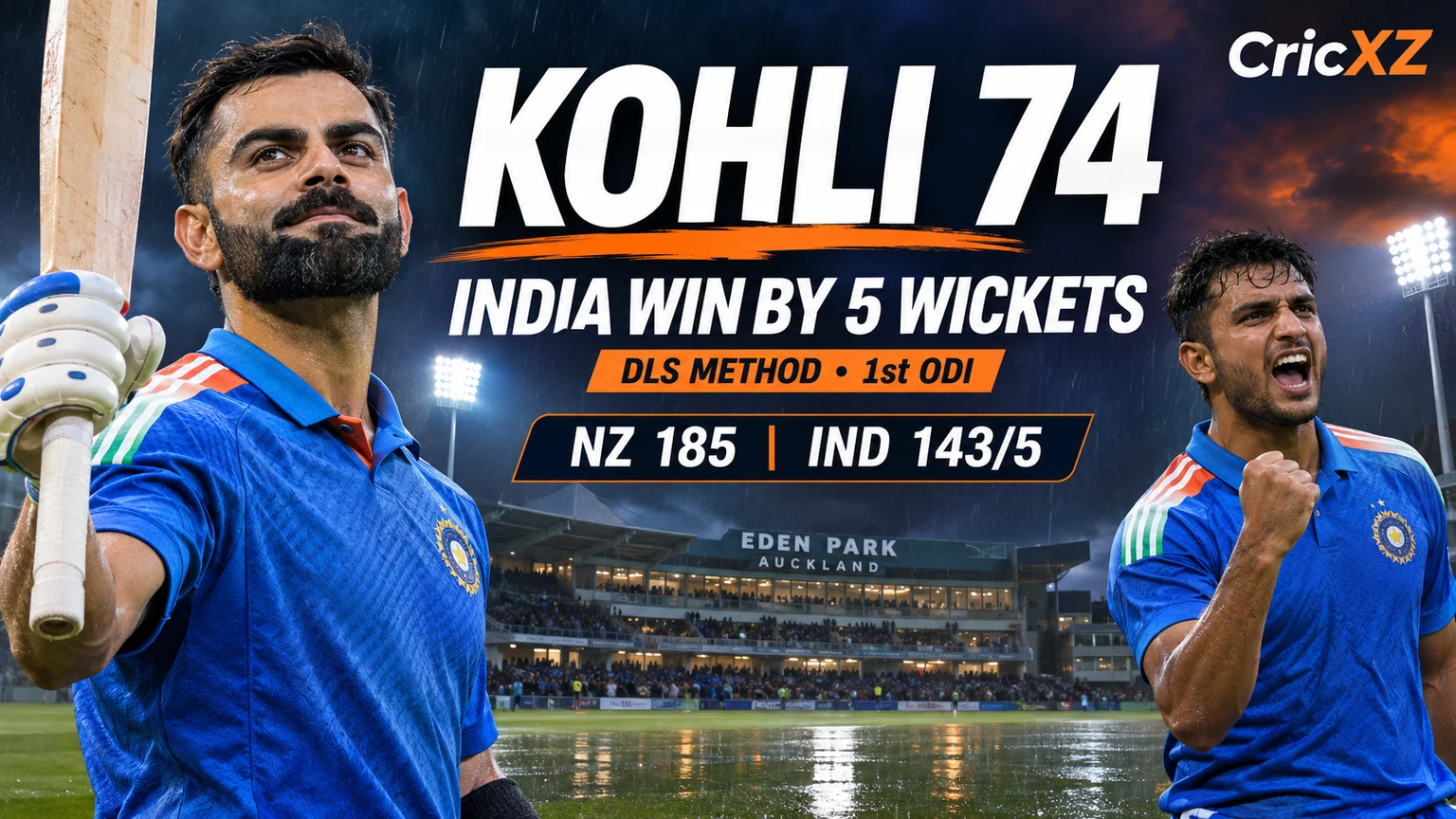
India beat New Zealand by five wickets under the DLS method in the first ODI at Eden Park, Auckland, on 4 November 2026. The hosts were dismissed for 185 in 40.2 overs. Rain reduced India's allocation to 32 overs and the target to 143; the visitors finished on 143/5 in 22.4 overs to lead the five-match series 1-0.
India vs New Zealand 1st ODI Result
New Zealand: 185 all out (40.2 overs)
India: 143/5 (22.4 overs)
Revised target: 143 in 32 overs
Result: India won by 5 wickets (DLS method)
Player of the Match: Anshul Kamboj, 2/22
Series: India lead 1-0
Kohli and Gill Build the Chase
Rohit Sharma fell without scoring, leaving India needing a steady response. Virat Kohli supplied it with 74 from 51 balls, while Shubman Gill contributed 37. Their 113-run second-wicket partnership gave the chase its foundation.
Kohli's innings combined urgency with control through the interruptions. His 13 fours and one six meant most of his runs came from boundaries, easing the scoring burden on his partners. India lost wickets later in the reply, but the earlier partnership had already put them close to the revised requirement.
Arshdeep and Gurnoor Take Seven Wickets
Arshdeep Singh claimed 4/70 and Gurnoor Brar returned 3/44 as India's seamers kept New Zealand from building a commanding total. Anshul Kamboj's 2/22 from ten overs provided control as well as wickets, and he received the Player of the Match award.
Tim Seifert made 38, Glenn Phillips 30 and Daryl Mitchell 28. Blair Tickner's late 34 helped lift the innings, but the home side finished below 200. Those contributions kept New Zealand competing without producing the sustained partnership needed for a larger total.
Why India Needed 143 After New Zealand Made 185
The two totals describe different playing conditions. New Zealand completed their innings before the chase was curtailed by rain. India's revised allocation was 32 overs, with a DLS target of 143. Reaching that adjusted target, rather than the original 186, completed the chase.
DLS adjusts a rain-affected chase for the batting resources available. It is not a simple comparison of the teams' final totals, and reducing overs does not mean subtracting the same proportion of runs. Here the published match result explicitly records a five-wicket win by the DLS method.
CricXZ Analysis: Control Mattered Alongside Wickets
The bowling figures show two complementary contributions. Arshdeep and Gurnoor collected seven wickets between them, while Kamboj conceded only 22 in a full ten-over spell. That combination prevented easy scoring from one end while wickets fell at the other. Judging the attack only by the leading wicket-taker would miss the value of Kamboj's economical support.
The chase offered a similar lesson about partnerships. Kohli supplied the bulk of the scoring, but his stand with Gill allowed India to recover from an early setback. The late wickets are a point to review before the next match; they do not erase the platform created by that partnership. These observations are CricXZ editorial analysis based on the scorecard.
What Comes Next?
India enter the second ODI with a 1-0 advantage. The next match is scheduled for 7 November in Wellington. One win gives the visitors an early position of strength, but four ODIs remain in the series.
Read our original Auckland preview for the pre-match context, or revisit the Hamilton T20I finale.
Sources and Verification
- Cricbuzz: completed scorecard and revised target
- Cricbuzz: final result, partnership and match award
- DT Next: independent match report
- BCCI: ODI series schedule
Final scores and result checked on 4 November 2026. The BCCI match page retrieved during research still displayed the innings break; final-result verification used the completed scorecard and independent reporting.